
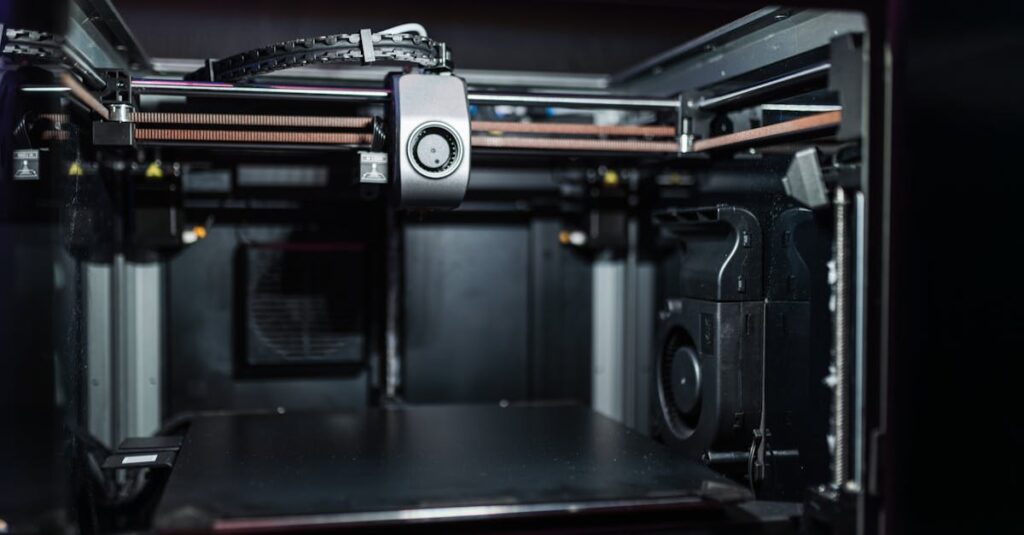

Imagine a world where your 3D prints can not only take shape but also conduct electricity. Welcome to the fascinating realm of conductive filament 3D printing! This innovative technology is like giving your creations a brain, allowing them to interact with their environment in ways you never thought possible. Forget about boring plastic models; now you can print circuits, sensors, and even wearable tech right from your desktop.
Table of Contents
ToggleOverview of Conductive Filaments
Conductive filaments, designed for 3D printing, utilize unique materials that allow electrical conduction. These filaments typically blend polymers with conductive materials such as carbon black or metal particles. Such a combination enables printed objects to maintain their structural integrity while allowing them to transmit electric current.
Applications for conductive filaments vary widely. They find use in creating flexible circuits, 3D sensors, and even light-up apparel. In the realm of electronics, prototypes made from conductive filament streamline the design process, reducing the time and cost associated with traditional circuit manufacturing.
Different types of conductive filaments are available on the market. PLA-based filaments serve as a popular choice due to their ease of use and compatibility with most printers. ABS-based options offer higher durability, making them suitable for more demanding applications. Other specialty filaments include TPU, which provides flexibility, ideal for wearable technology.
Understanding printing conditions is crucial for optimal results. Temperature settings and printer calibration significantly impact conductivity and print quality. Generally, maintaining a nozzle temperature between 200°C and 250°C ensures proper flow and adhesion while preserving filament properties.
Furthermore, conductivity varies among different conductive filaments. Some variations can reach resistivity levels as low as 10 ohm-cm, ideal for active electronic components. Increased demand for these materials in research and development continues to drive innovation, making conductive filaments a significant area of interest in 3D printing technology.
Conductive filaments present exciting opportunities for enhancing the functionality of 3D printed objects. Researchers and developers now explore new applications, pushing the boundaries of what can be produced with 3D printing.
Advantages of Conductive Filament 3D Printing
Conductive filament 3D printing provides significant benefits that enhance the manufacturing of electronic components. This technology not only simplifies the production process but also broadens the scope of design possibilities.
Enhanced Electrical Properties
Printed objects demonstrate superior electrical conductivity due to the material composition of conductive filaments. Certain filaments achieve resistivity levels as low as 10 ohm-cm, enabling effective integration into electronic devices. High conductivity allows these components to function reliably in applications like sensors and wearable devices. Users appreciate the ability to create connections within the printed structures, eliminating the need for additional wiring. Structural integrity remains intact while maintaining electrical performance, making it ideal for applications in various industries.
Versatility in Applications
Diverse applications benefit from conductive filament 3D printing, showcasing its adaptability in different sectors. Flexible circuits, a primary use, offer the freedom to create unique shapes and designs. Light-up apparel represents another innovative output, blending functionality with aesthetics. Prototyping electronic components becomes more efficient, allowing rapid testing and iteration. The technology supports both hobbyist projects and industrial designs, making it relevant for both amateur and professional creators. Researchers continue to explore new possibilities, emphasizing the continuous evolution of this field.
Types of Conductive Filaments
Different types of conductive filaments cater to varying applications in 3D printing. Understanding these categories enhances the effectiveness and suitability of the materials for specific projects.
Carbon-Based Filaments
Carbon-based filaments combine polymers with carbon additives, such as carbon black or graphene. These materials excel in conductive properties while maintaining good printability. The resistivity of carbon-based filaments varies, with some achieving resistivity as low as 10 ohm-cm. This low value makes them suitable for applications that require reliable electrical conductivity, such as sensors or simple circuits. Widely used for rapid prototyping, these filaments also offer a balance of flexibility and rigidity, making them versatile across various projects. Their ease of use encourages adoption within the maker community and educational settings.
Metal-Based Filaments
Metal-based filaments incorporate metal particles, typically copper or silver, into a polymer matrix. This combination delivers superior conductivity compared to carbon-based options. Some metal-based filaments achieve exceptionally low resistivity, effectively enabling high-performance electronic applications. Designing prints with these materials often requires careful temperature settings and printer calibration to prevent clogging and ensure quality. Durability is another advantage, allowing prints to withstand stress while functioning as electrical components. Ideal for producing complex circuits and interconnects, metal-based filaments open new avenues for advanced electronics and wearable technologies.
Applications in Various Industries
Conductive filament 3D printing finds extensive use across several industries, enhancing innovation and efficiency.
Electronics and Prototyping
Electronics heavily relies on conductive filaments for developing prototypes. This technology enables engineers to print functional circuits directly, streamlining the design process. Prototyping using conductive materials reduces turnaround time and lowers costs. Engineers create complex circuits quickly while maintaining high electrical performance. Advanced filaments can deliver resistivity levels as low as 10 ohm-cm, ensuring effective integration into devices. Integrating components becomes less cumbersome, as printed prototypes can incorporate elements like switches and sensors seamlessly.
Wearable Technology
Wearable technology benefits significantly from the flexibility of conductive filaments. Manufacturers design items such as smart textiles or fitness trackers that are comfortable, lightweight, and functional. Conductive filaments enable the integration of sensors directly into the fabric, allowing users to monitor health metrics in real-time. Customization possibilities increase as designers can create unique shapes and structures that adapt to the human body. The use of TPU-based filaments ensures durability and flexibility, essential for wearables that endure daily movement. These advancements push the boundaries of how technology interacts with users.
Educational Projects
Educational projects increasingly utilize conductive filaments to engage students in practical learning experiences. Schools incorporate 3D printing into curricula, enabling students to create their own electronic projects. Conductive filaments allow for hands-on experimentation with circuits and sensors, making abstract concepts tangible. Students can easily prototype ideas, fostering creativity and problem-solving skills. The affordability of these materials supports educational institutions by eliminating costly components. Encouraging experimentation fosters an environment where innovation thrives, preparing students for future careers in technology.
Challenges and Limitations
Conductive filament 3D printing faces several challenges that can impact the final product’s quality and performance. Various factors influence successful outcomes in this technology.
Printing Technique Considerations
Consistency in printing technique plays a crucial role. Calibration settings for temperature and speed directly affect the conductivity of the final print. Users must adjust extruder temperatures to suit specific filament types, as overheating can degrade conductive properties. Layer adhesion also contributes to electrical performance, requiring optimal settings for layer height and infill density. Proper printer maintenance and nozzle diameter selection further ensure high-quality prints with desired conductivity levels.
Material Compatibility
Compatibility between filaments and typical 3D printer components is essential. Conductive filaments may not bond well with standard nozzles, leading to issues during the printing process. Some users experience clogging when printing with certain carbon-based or metal-based filaments solely due to their composite nature. Additionally, the successful fusion of layers depends on understanding the thermal properties of every material used. Choosing appropriate substrates and print surfaces enhances adhesion and minimizes warping, ultimately improving overall print reliability.
Conclusion
Conductive filament 3D printing is paving the way for innovative applications across multiple industries. Its ability to integrate electrical functionality into printed objects transforms traditional manufacturing processes, making design and prototyping more efficient. As users explore various types of conductive filaments, they unlock new possibilities for creating smart devices and interactive products.
While challenges like material compatibility and printing precision exist, the potential benefits far outweigh these obstacles. With continued advancements in technology and materials, conductive filament 3D printing will likely become a staple in electronics, education, and wearable tech. Embracing this technology can lead to exciting developments that redefine how we approach design and functionality in the digital age.


