
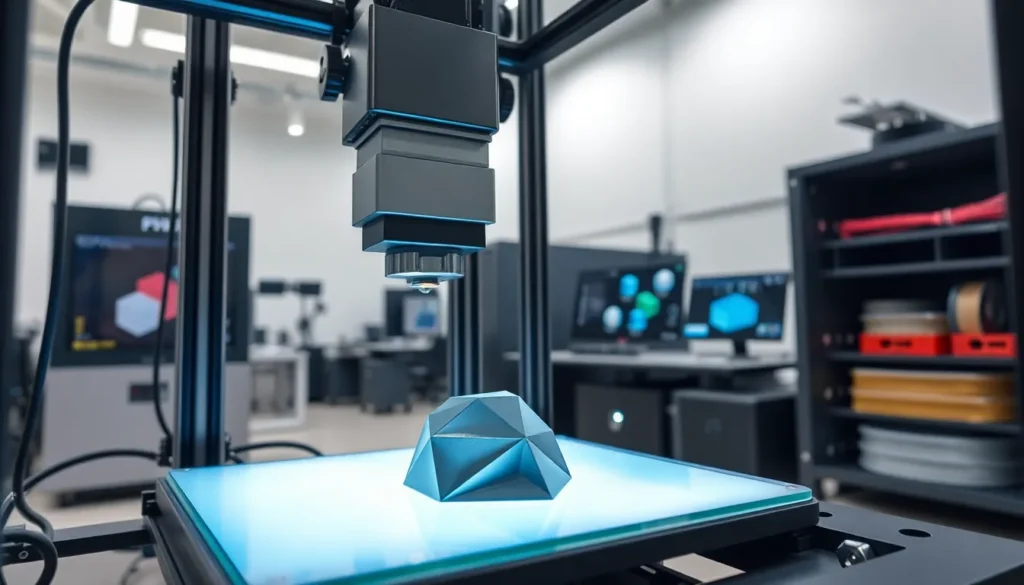

3D printing has changed how companies design, prototype, and manufacture products. This technology builds physical objects layer by layer from digital files. It offers speed, customization, and cost savings that traditional manufacturing cannot match.
From aerospace components to medical implants, 3D printing serves industries that demand precision and flexibility. The global 3D printing market reached $18.33 billion in 2024 and continues to grow rapidly. Whether someone wants to create prototypes, final products, or custom parts, 3D printing provides practical solutions for modern manufacturing challenges.
Table of Contents
ToggleKey Takeaways
- 3D printing builds objects layer by layer from digital files, offering speed, customization, and cost savings over traditional manufacturing.
- FDM, SLA, SLS, and metal printing are the main 3D printing technologies, each suited for different applications and budgets.
- Industries from healthcare to aerospace use 3D printing for custom prosthetics, lightweight components, and rapid prototyping.
- Beginners can start 3D printing with entry-level FDM machines priced between $200 and $500, using free slicing software like Cura or PrusaSlicer.
- Modern 3D printing achieves precision of 0.1mm or better, making it viable for both prototypes and production-quality parts.
- The global 3D printing market reached $18.33 billion in 2024, reflecting its rapid adoption across industries worldwide.
How 3D Printing Works
3D printing uses an additive manufacturing process. A machine deposits material layer by layer to create a three-dimensional object. This differs from traditional subtractive methods that cut away material from a solid block.
The process starts with a digital 3D model. Designers create this model using CAD (computer-aided design) software or 3D scanning technology. The software then slices the model into hundreds or thousands of horizontal layers.
A 3D printer reads these sliced files and builds the object one layer at a time. The printer deposits material, plastic, metal, resin, or other substances, according to the digital instructions. Each layer bonds to the previous one until the object is complete.
Most 3D printing projects follow these steps:
- Design: Create or download a 3D model file
- Slice: Convert the model into printable layers using slicing software
- Print: The machine builds the object layer by layer
- Post-process: Remove supports, sand surfaces, or apply finishes
Print times vary based on object size, complexity, and chosen technology. A small figurine might take two hours. A large industrial part could require several days. The precision of modern 3D printing reaches accuracies of 0.1mm or better, depending on the machine and material used.
Common Types of 3D Printing Technologies
Several 3D printing technologies exist, each with distinct advantages. The best choice depends on material requirements, budget, and intended application.
Fused Deposition Modeling (FDM)
FDM printers melt plastic filament and extrude it through a heated nozzle. This is the most affordable and widely used 3D printing method. Desktop FDM machines cost between $200 and $2,000. They work well for prototypes, educational projects, and functional parts.
Common FDM materials include PLA, ABS, PETG, and nylon. The technology produces visible layer lines, which may require post-processing for smooth finishes.
Stereolithography (SLA)
SLA uses a UV laser to cure liquid resin into solid plastic. This 3D printing method produces extremely smooth surfaces and fine details. It suits applications like jewelry, dental models, and detailed prototypes.
SLA printers cost more than FDM machines, and the resin materials carry higher prices. But, the surface quality often justifies the investment for precision applications.
Selective Laser Sintering (SLS)
SLS fuses powdered materials, typically nylon, using a high-powered laser. This 3D printing technology creates strong, functional parts without support structures. The unfused powder supports the object during printing.
SLS machines serve industrial applications and produce durable end-use parts. They represent a higher investment but deliver production-quality results.
Metal 3D Printing
Direct Metal Laser Sintering (DMLS) and similar technologies print metal parts. Aerospace, automotive, and medical industries use metal 3D printing for critical components. These systems cost significantly more but enable designs impossible with traditional metalworking.
Popular Applications Across Industries
3D printing serves diverse industries with unique requirements. Each sector leverages the technology’s strengths in different ways.
Healthcare and Medical
Medical professionals use 3D printing for surgical planning models, custom prosthetics, and dental aligners. Surgeons practice complex procedures on patient-specific anatomical models before operating. The technology enables personalized medical devices that fit individual patients perfectly.
Bioprinting research explores 3D printing living tissue for future organ transplants. While still experimental, this application shows tremendous promise.
Aerospace and Automotive
3D printing reduces weight in aerospace components while maintaining strength. Boeing, Airbus, and SpaceX incorporate 3D printed parts in aircraft and rockets. The automotive industry uses the technology for prototyping, tooling, and limited-production parts.
Formula 1 teams 3D print wind tunnel models and car components. This speeds development cycles from weeks to days.
Consumer Products and Fashion
Custom jewelry, eyewear, and footwear benefit from 3D printing’s design freedom. Adidas and Nike produce midsoles using 3D printing technology. Consumers can order personalized products that match their exact specifications.
Architecture and Construction
Architects create detailed scale models with 3D printing. Some companies now print entire buildings using large-format concrete printers. This approach reduces construction time and material waste.
Getting Started With 3D Printing
Beginning with 3D printing requires minimal investment. Entry-level printers deliver capable results for hobbyists and small businesses.
Choose the right printer: FDM machines offer the best value for beginners. Popular options include the Bambu Lab A1 Mini, Creality Ender-3, and Prusa MINI+. Prices range from $200 to $500 for quality starter machines.
Learn the software: Free slicing programs like Cura, PrusaSlicer, and Bambu Studio prepare 3D models for printing. Most users learn the basics within a few hours. For design work, Fusion 360 offers free licenses for hobbyists.
Start with simple projects: Print test objects and calibration pieces first. Gradually increase complexity as skills develop. Online repositories like Printables and Thingiverse provide thousands of free 3D models.
Understand materials: PLA filament works best for beginners. It prints easily and requires no heated enclosure. Once comfortable, users can explore PETG, ABS, and specialty materials.
3D printing has a learning curve, but the community provides excellent support. Forums, YouTube tutorials, and local maker spaces help new users troubleshoot problems and improve their skills.


