
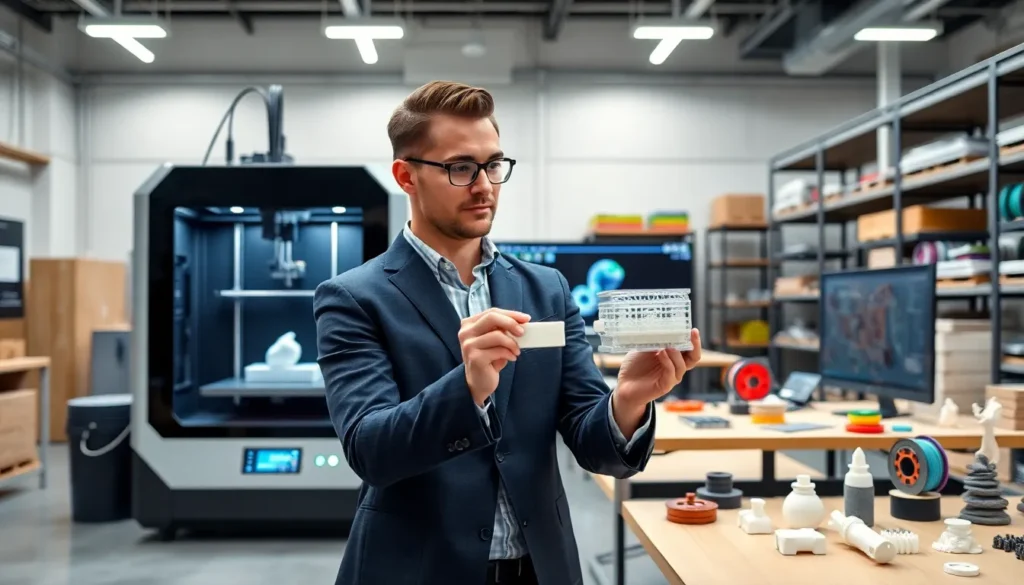

3D printing techniques have transformed how manufacturers, hobbyists, and engineers create physical objects from digital designs. Each method offers distinct advantages depending on the material, precision, and budget involved. Whether someone needs rapid prototypes or production-ready parts, understanding these additive manufacturing methods helps them make smarter decisions.
This guide covers the most widely used 3D printing techniques today. From thermoplastic extrusion to laser-based powder fusion, each approach serves different purposes. By the end, readers will know which technique fits their specific project requirements.
Table of Contents
ToggleKey Takeaways
- FDM is the most affordable and accessible 3D printing technique, ideal for hobbyists, educators, and rapid prototyping.
- SLA and resin-based 3D printing techniques deliver exceptional surface quality and fine details, making them perfect for jewelry, dental, and miniature applications.
- SLS eliminates the need for support structures and produces parts with consistent mechanical properties, suited for industrial and functional end-use components.
- Choose your 3D printing technique based on budget, material needs, surface finish expectations, and production volume.
- Many professionals combine multiple techniques—using FDM for concepts, SLA for presentation models, and SLS for functional testing.
- SLS parts rival injection molding quality, making this technique cost-effective for medium production runs without tooling investment.
Fused Deposition Modeling (FDM)
Fused Deposition Modeling (FDM) is the most common 3D printing technique available. It works by heating thermoplastic filament and extruding it through a nozzle, layer by layer, until the object takes shape. Most desktop 3D printers use this method because of its low cost and accessibility.
FDM printers accept materials like PLA, ABS, PETG, and specialty filaments such as carbon fiber composites. PLA remains the most popular choice for beginners because it prints easily and doesn’t require a heated enclosure. ABS offers better heat resistance but needs proper ventilation due to fumes.
Pros and Cons of FDM
The biggest advantage of FDM is affordability. Entry-level machines cost a few hundred dollars, and filament prices stay reasonable. This 3D printing technique also handles large build volumes well, making it ideal for prototypes and functional parts.
But, FDM prints show visible layer lines. Post-processing like sanding or acetone smoothing can improve surface finish, but it adds time. Fine details suffer compared to resin-based methods. For mechanical parts that don’t need cosmetic perfection, FDM works great. For miniatures or jewelry prototypes, other 3D printing techniques perform better.
FDM suits hobbyists, educators, and engineers who need quick iterations without very costly. It’s the workhorse of additive manufacturing for good reason.
Stereolithography (SLA) and Resin Printing
Stereolithography (SLA) uses ultraviolet light to cure liquid photopolymer resin into solid layers. This 3D printing technique produces exceptionally smooth surfaces and captures fine details that FDM cannot match. SLA was actually the first commercial 3D printing method, patented in 1986.
Modern resin printers come in two main varieties: traditional SLA with a laser, and masked stereolithography (MSLA) using LCD screens. MSLA printers cure entire layers at once, speeding up production. Both deliver similar quality, though MSLA machines tend to cost less.
Materials and Applications
Resin 3D printing techniques work with standard, flexible, castable, and engineering-grade resins. Standard resins suit models and prototypes. Castable resins enable jewelry makers to create molds for lost-wax casting. Engineering resins offer heat resistance and mechanical strength for functional testing.
Dentistry, jewelry design, and miniature gaming communities rely heavily on SLA printing. The surface quality eliminates much post-processing, though parts still need washing and UV curing after printing.
Limitations to Consider
Resin printing requires more cleanup than FDM. Uncured resin is toxic and needs careful handling with gloves and proper ventilation. Build volumes also tend to run smaller on consumer-grade resin printers.
The cost per print runs higher than FDM when factoring in resin prices and consumables like FEP films. But for applications demanding precision, SLA 3D printing techniques justify the expense.
Selective Laser Sintering (SLS)
Selective Laser Sintering (SLS) represents an industrial-grade 3D printing technique that fuses powdered materials using a high-powered laser. Unlike FDM or SLA, SLS doesn’t need support structures because the surrounding powder supports each layer during printing.
This method works with nylon, TPU, and other polymer powders. The laser traces each cross-section, sintering particles together. After printing, operators remove excess powder, which can be recycled for future jobs. This efficiency reduces material waste significantly.
Why SLS Stands Out
SLS produces parts with isotropic mechanical properties, meaning they perform consistently regardless of print orientation. This makes SLS ideal for functional prototypes and end-use parts. The absence of support structures allows complex geometries that other 3D printing techniques struggle to achieve.
Aerospace, automotive, and medical industries use SLS for production components. The parts handle stress, heat, and wear better than most FDM prints. Surface texture feels slightly grainy but smooth enough for many applications.
Cost and Accessibility
SLS machines historically cost hundreds of thousands of dollars. But, desktop SLS printers have emerged in recent years, bringing prices down to the $10,000-$30,000 range. Service bureaus also offer SLS printing for those who need occasional access without the capital investment.
For prototyping functional assemblies or small-batch manufacturing, SLS 3D printing techniques deliver professional results that match injection molding quality.
Choosing the Right Technique for Your Project
Selecting the best 3D printing technique depends on several factors: budget, material requirements, surface finish expectations, and production volume.
Budget considerations: FDM offers the lowest entry cost. Hobbyists and small businesses start here. SLA sits in the middle range, while SLS requires significant investment or outsourcing.
Material needs: FDM handles a wide variety of thermoplastics. SLA excels with specialty resins for casting or dental applications. SLS works best for durable nylon parts.
Surface quality: SLA wins for smooth, detailed surfaces. FDM shows layer lines. SLS produces a matte, slightly textured finish.
Mechanical performance: SLS parts perform most consistently under stress. FDM works for functional prototypes. SLA resins vary widely in strength.
Production volume: For one-offs and small batches, any technique works. SLS becomes cost-effective for medium runs where injection molding tooling isn’t justified.
Many professionals use multiple 3D printing techniques depending on the project phase. They might start with FDM for rough concept models, move to SLA for presentation prototypes, and finish with SLS for functional testing. Each method contributes something different to the development process.


